
Description
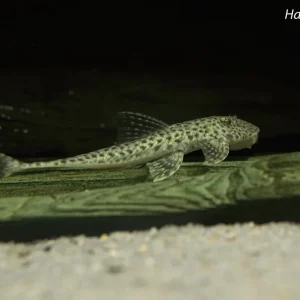
Remarks: The red fin thresher pleco (Aphanotorulus emarginatus) has become a fish of many names ever since its first classification in 1840. Scientists have reclassified it into multiple different genera throughout the years with the most recent update occurring in 2016 placing it in the Aphanotorulus genus. Amongst hobbyists, it has been known by a handful of different L-numbers depending on collection point with some overlapping; L011, L035, L108, L116, and L131. The fish we currently have were imported under the L-numbers L011 and L035 with their collection point being reported as the Rio Pará.
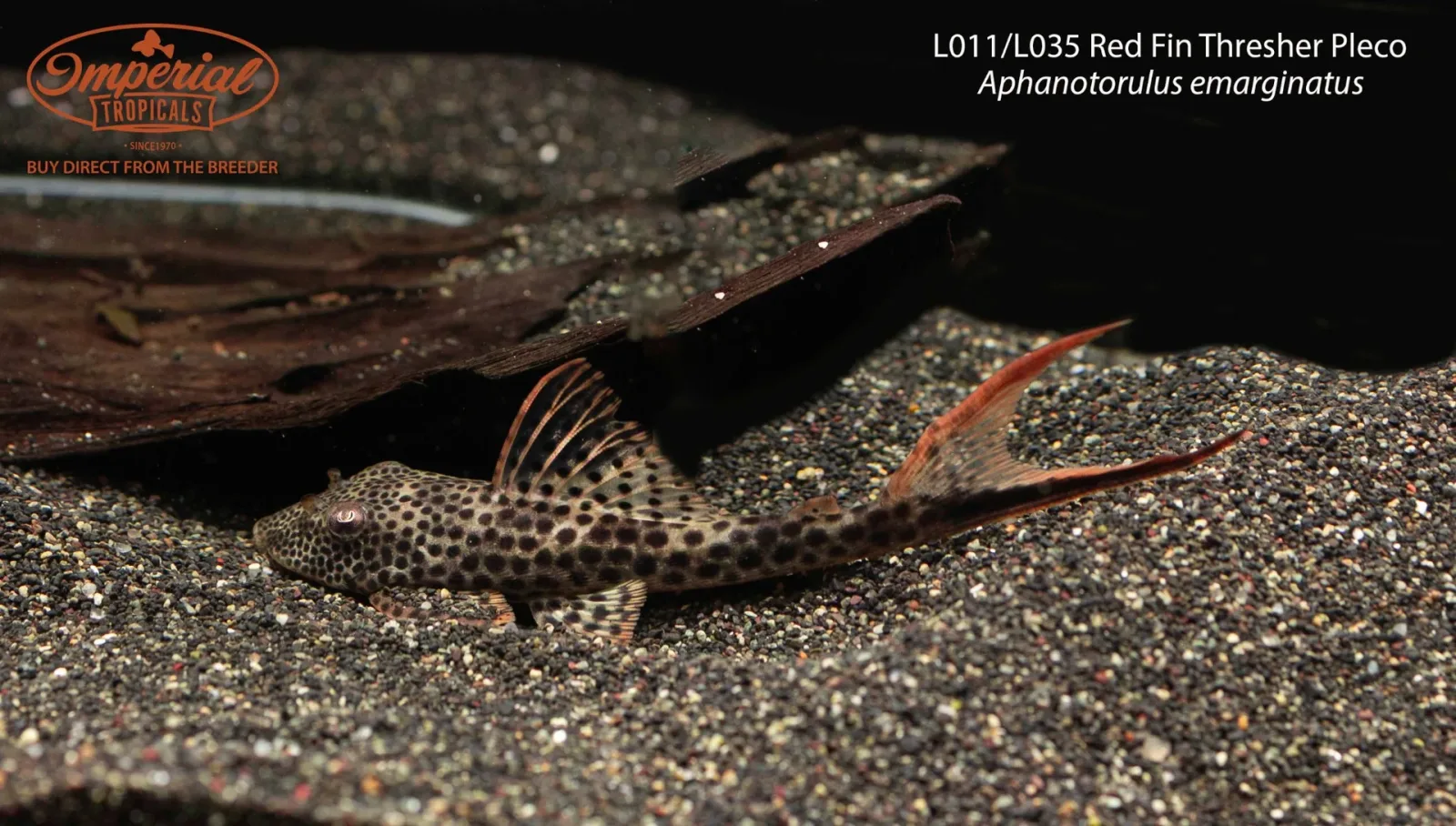
Plecos that accumulate so many L-numbers and have such debate around their classification tend to be ones that are very widespread in their native range. The red fin thresher pleco is subject to this phenomenon with it having populations throughout the Amazon. Arguments are still being had over whether the different populations that tend to have slight variation in color are the same species or not. As mentioned, there is some difference between collection points, but in general, red fin thresher plecos are tan in color with an orange or red tinge to the outer edge of the caudal (tail) fin. This flash of color alongside its leopard spot pattern makes this pleco a must have for Loricariid lovers.
The native range of the red fin thresher pleco is broad and varied, but all these habitats are similar in regards to water parameters with conditions being warm, soft, acidic, and heavily oxygenated even in areas of low flow. Replicating these conditions within the home aquarium will keep this species healthy, happy, and looking their best. Many large Loricariids tend to be territorial around other plecos, but the red fin thresher pleco is an exception. They are very peaceful and some have successfully kept them with plecos only a third of their size. On the subject of their size, red fin thresher plecos can get to an impressive 16” long. Such a big species that is also surprisingly active will need an aquarium no smaller than 150 gallons so it has plenty of swimming space and water volume to handle its waste output.
Feeding the red fin thresher pleco is very simple and straightforward. They are an herbivore leaning omnivore that will take almost any food offered, but do not seem interested in algae. Since red fin thresher plecos do not appear to rasp on wood, it is not required. While they do not need the presence of wood, this species, like most catfish, will need plenty of hiding spots which can come in the form of rock caves, pvc pipes, and larger flower pots. To handle their waste output and keep oxygen levels high, it is recommended to over filter the aquarium and add wave makers and/or bubblers as needed.
With such a relaxed demeanor, elegant pattern, and hardy nature, the red fin thresher pleco can make a great addition to almost any larger South American tank.