
Description
Plant Profile
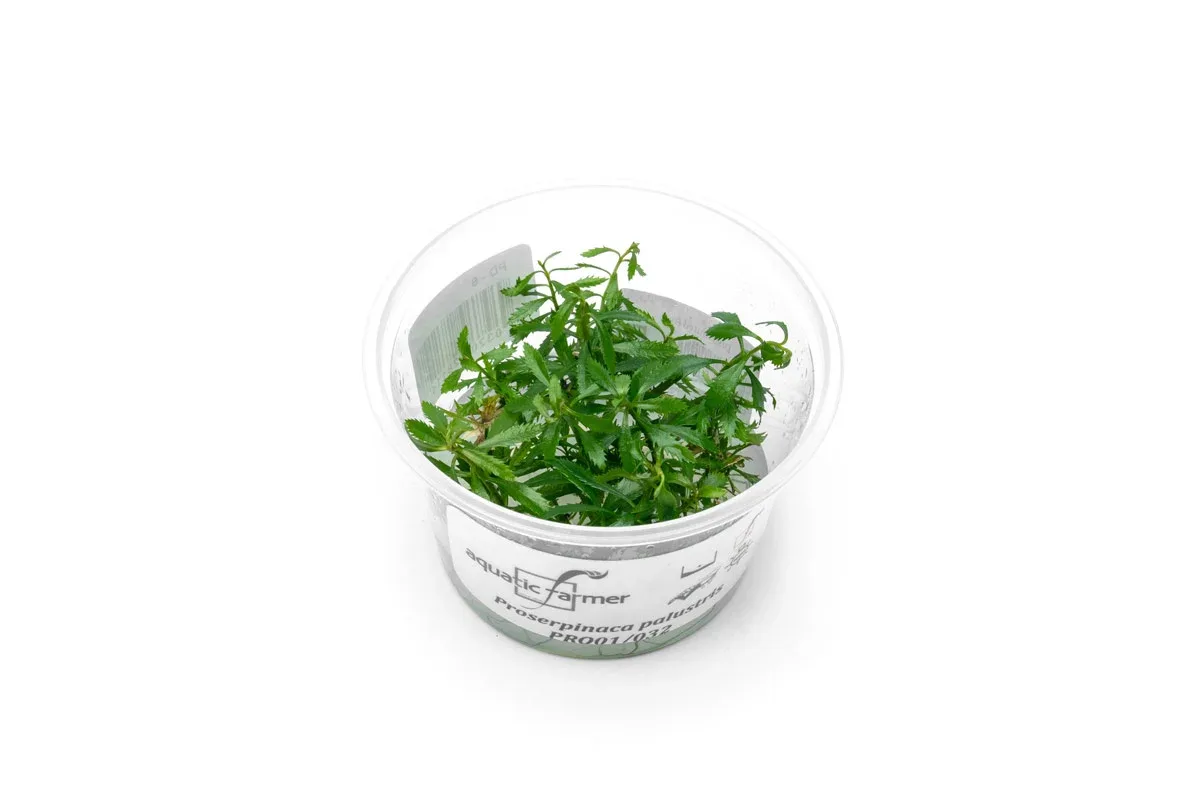
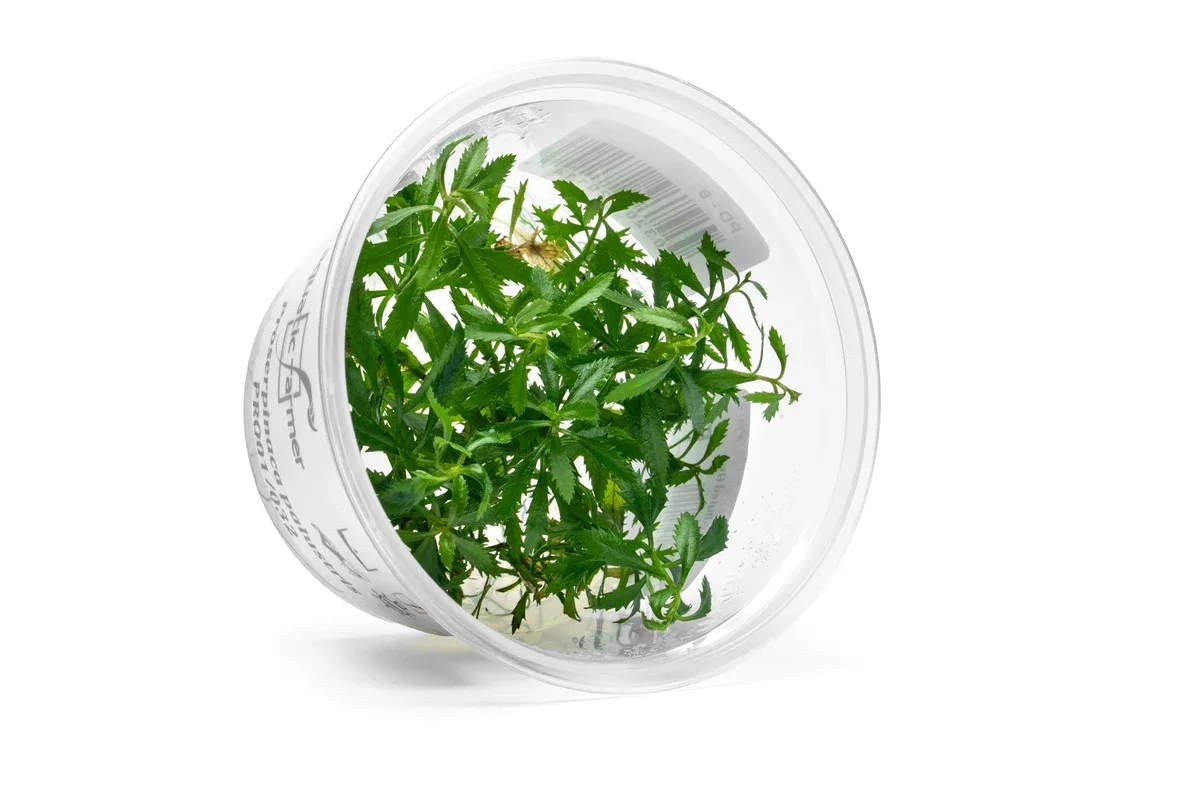
Proserpinaca Palustris, or Mermaid Weed, is an aquatic stem plant native to the marshes, swamps, and slow-moving streams of North America. Renowned for its distinctly serrated, comb-like leaves that feature fine saw-toothed edges, this species brings unmatched visual texture and depth to planted aquariums. Depending on light intensity and nutrient dosing, its foliage dynamically shifts from a warm golden-green to fiery amber, copper, and brilliant ruby-red. Reaching 4 to 12 inches in height, Mermaid Weed serves as a midground accent or background backdrop, especially in Dutch-style aquascapes where its saw-toothed leaf geometry provides sharp contrast against smooth-leaved neighbors.
Tissue Culture cups ensure your aquascape gets a super clean starting point. Lab‑grown and fully sterile, it arrives without pests, snails, duckweed, or any unwanted algae. It’s the go‑to option for anyone who wants peace of mind when adding fresh greenery to a carefully maintained setup.
Key Features & Benefits
Intricate saw-toothed foliage adds an unmatched comb-like texture and geometric contrast to midground and background zones.
Displays a dynamic color spectrum shifting from golden-green to brilliant orange and ruby-red under high-tech conditions.
Care & Planting Instructions
Thoroughly wash away the nutrient gel from the roots with your fingers before parting it out into manageable portions.
Use fine-tip pinsettes to insert small stem clusters 1 inch apart into your aquarium soil.
Provide medium-to-high lighting and pressurized CO2 injection; regular liquid fertilization rich in iron and micronutrients intensifies leaf serration and brings out brilliant red tones. See our guide to growing red aquarium plants.
Maintain stable water parameters and avoid sudden parameter swings to prevent stem melting or leaf shedding.
To propagate, trim main stem tops with sharp straight shears and replant trimmings directly into your aquarium soil. Read our trimming & propagation guide for details.
Quick Facts
Listed information should be treated as general guidelines only. Team Buce Plant encourages you to do thorough research to ensure healthy growth!
Attribute
Specification
Scientific Name
Proserpinaca palustris
Common Name(s)
Mermaid Weed, Marsh Mermaid Weed, Proserpinaca Palustris
Family
Haloragaceae
Plant Type / Taxonomy
Tissue Culture Stem Plant
Care Difficulty
Easy to Moderate
Light Requirement
Medium to High
CO2 Requirement
Required (Essential for vibrant red tones and deep leaf serration)
Placement / Usage
Midground Accent / Background Coverage & Dutch Streets
Height / Size
4–12”+ (Cup portion size: 2–3”)
Growth Rate
Moderate to Fast
Water Parameters
pH 6.5–7.5
Propagation Method
Cuttings (Cut stem tops or lateral shoots and replant)
Origin
North America
Frequently Asked Questions
1. Why are the leaves on my Mermaid Weed changing shape?
Proserpinaca Palustris exhibits significant leaf morphology changes between emersed and submerged forms. Under high light and pressurized CO2 submerged in the aquarium, new leaves will transform from broad, slightly toothy shapes into deeply pinnatifid, comb-like, saw-toothed foliage.
2. How do I get Proserpinaca Palustris to turn deep red?
Achieving deep ruby-red and copper tones on Mermaid Weed requires high-intensity lighting, pressurized CO2 injection, and a reliable fertilizer routine supplying iron and essential micronutrients.
3. How do I prepare Proserpinaca Palustris Tissue Culture before planting?
Carefully remove the gel from the roots by washing the plant in a bowl of room-temperature water or gently rinsing it under a tap. Once the gel is removed, separate the cluster into smaller clumps or individual stems and plant them into your aquarium soil using fine pinsettes.